The Religion of Individuality
Acts 2:42-47
It is unfortunate how unfairly marginalized and even villainized people who speak up for services and resources to be publicly funded that can help our neighbors in poverty can be. Words like “Socialist” or “Communist” are lobbed at these people as if those words were condemnations.
In the late 70s during Ronald Reagan’s presidential campaign, the term “welfare queen” was popularized as a charicature of all of those poor people who “gamed” the system by taking advantage of welfare funded programs. The actual “welfare queen” was a woman named Martha MIller who was convicted of fraud for using multiple aliases to game the welfare system of hundreds of thousands of dollars. Her scheme was elaborate and involved up to 33 identities with different costumes. She was racially ambiguous and could assume many different personas, but the 1930 census lists her as White.
In Reagan’s campaigning in the 70s, the “welfare queen” became less about a sophisticated and racially ambiguous person who went to astonishing lengths to defraud public welfare and became more the image of all poor people, especially poor black people. This charicature was the root of Reagan’s argument to drastically cut many kinds of public funding (which he did). This charicature led to a broad cultural assumption that poor people who used public resources like food stamps would only buy lobsters and steaks and use precious welfare dollars wastefully, remaining perpetually poor since they could get so much luxury for free instead of “pulling themselves up by their bootstraps.”
Nonsense.
With our city’s special election over the zoning code repeal now over, those of us on the “no” campaign side are processing the information we have about it. Who voted and which ward they lived in, their age, and other data points can help us understand what happened and how we lost so profoundly.
What we have learned is that we didn’t really do anything in how we ran our campaign that would have made a difference in the outcome. In Lakewood, CO, there has been a history of ill-conceived initiatives and a referendum all occuring over the past 7 years that all have something in common: an overwhelming support of mostly retired people who are lucky enough to own a home and property in our city.
What we learned is that the role of one’s individual interest in a policy that affects the entire city won out over trying to create a regulatory environment that would have led, organically and over time, more affordable housing that would benefit the entire city.
Housing policy conversations can be very frustrating because it is nigh to impossible to convey the importance of zoning and building code details to younger and poorer people who are perenially busy with more than one job, have children, and have anxieties that are far more urgent than what words are written in some policy that takes a college degree to adequately interpret. This is made even more difficult when the lies of scarcity and false narratives of bulldozed neighborhoods are easier to believe than the truer more complex nuances of policies like are found in a zoning code.
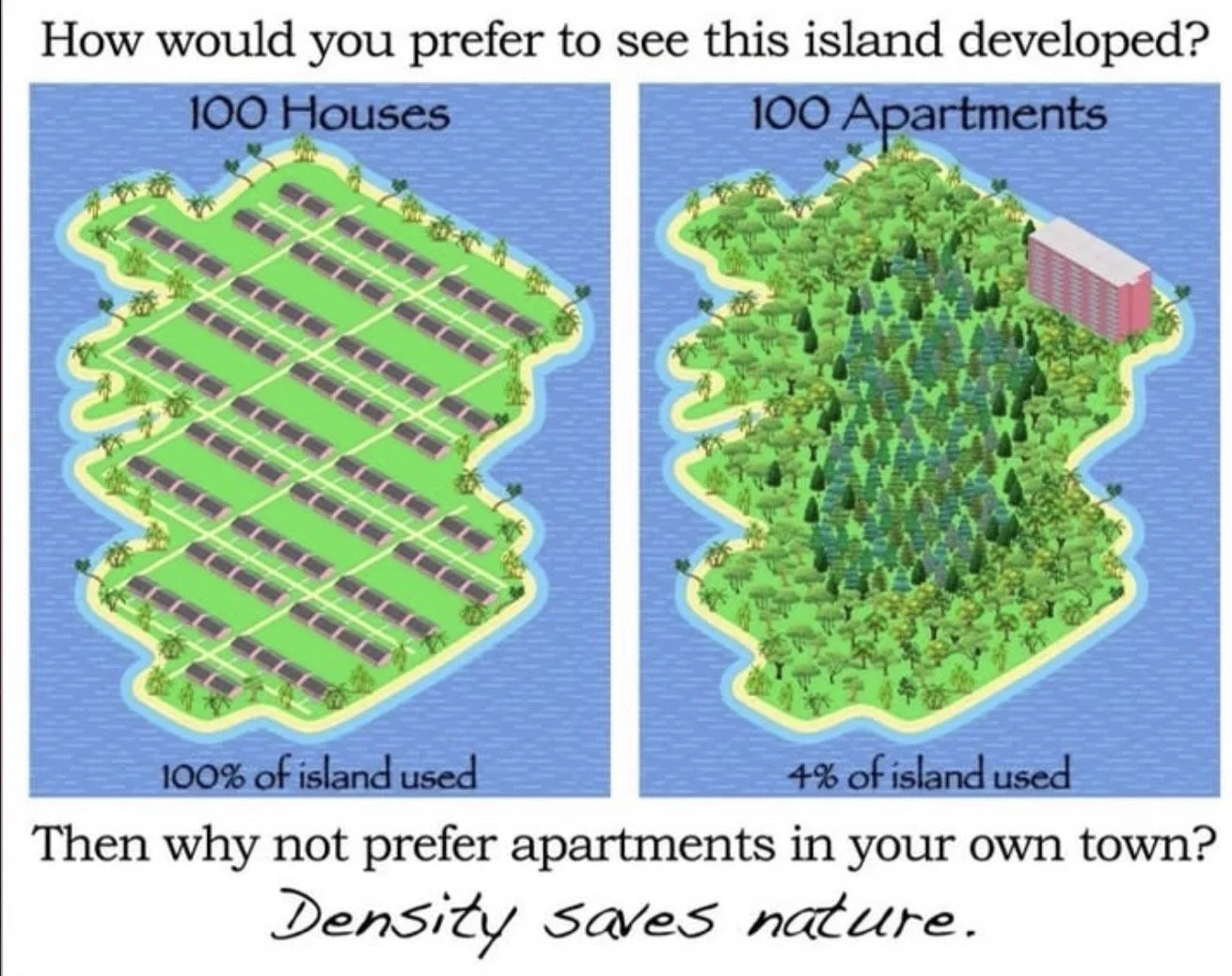
But this data from the election results points one thing out to me very clearly: the loudest voices in housing politics right now are the ones who are very concerned with their own lives, their own homes, and the value of their own property. Over and over I personally witnessed lots of rhetoric about people moving to Lakewood to “get away from Denver” and “if people can’t afford to live in Lakewood they should suck it up and find somewhere else to live.”
I guess they also believed that people trying to become a first time home buyer should “pull themselves up by their bootstraps,” too.
Housing policy, homelessness, and poverty in general are all connected. And our biggest problem with dealing with them is religion. Not Christianity, Judaism, or Islam, but the pervasive religion at large in the United States: individuality. This is the religion that not only ignores but actively condemns the interest of a community over the interest of any individual’s “liberty.” Anything that asks an individual to give up anything for a broader community is suspect. This religion has a chokehold on our nation’s politics as it threatens the manufactured scarcity that makes capitalism such a lucrative economic system for a shrinking number of increasingly wealthy people.
The religion of individuality’s primary teaching proclaims a lie of scarcity. “There isn’t enough, so make sure you get yours!” This lie fuels the economic system that comes from the religion of individuality, capitalism, which relies on the assumption of scarcity to generate wealth. But this lie contradicts the truth of the Gospel. Christianity cannot be a Christ-centered faith if proclamations of scarcity and celebrations of individual wealth are louder than the truth of God’s abundance which is readily available to everyone.
The very first iterations of Christian community challenged this religion of individuality. In Acts 2, verse 44-46 says:
“all who believed were together and had all things in common; they would sell their possessions and goods and distribute the proceeds to all, as any had need. Day by day, as they spent much time together in the temple, they broke bread at home and ate their food with glad and generous hearts.”
This way of life places value in something we might call a collective or communal good. No one ate less than anyone else. They shared out of what they all had so that everyone could bake their bread at home and eat food with glad and generous hearts. The thing about this “community of goods” economy the early Christian community engaged with is that while some gave up more while others received more, at the end of the day, it universally increased gladness and generosity for everyone. This economy in Acts 2 is different than capitalism, and more closely resembles a “gift” economy present in many indigenous cultures that existed prior to the United States.
I think the religion of individuality starves us of a prosperous future. For as we increasingly grow more and more anxious about losing what we individually have, we start to hoard more than we actually need. We deprive children of food because even when there is plenty of it we still maintain inaccessibility to it through policies and the practices of our scarcity-building capitalism. We deprive ourselves of a future of gladness and generosity by embracing a shriveled religion of individuality that prioritizes individual liberty, individual wealth, individual effort over what is possible when we bring these things together in community.
This is the truth I have learned from how the conversation around housing went in Lakewood’s special election: instead of protecting an affordable future for Lakewood that could build an inclusive city, the rights of individual home owners to keep their homes (and the homes of their future neighbors) as the same expensive, large lot single family properties they are now won out instead. And to me, that is a shining illustration of the religion of individuality.
Lakewood has lost an opportunity to build an inclusive community and provide a way for our city’s next generation to flourish. But I still have hope that we can proclaim a gospel of abundance regardless of any single election or policy decision.